(718) 249-7447
 Call Us Now


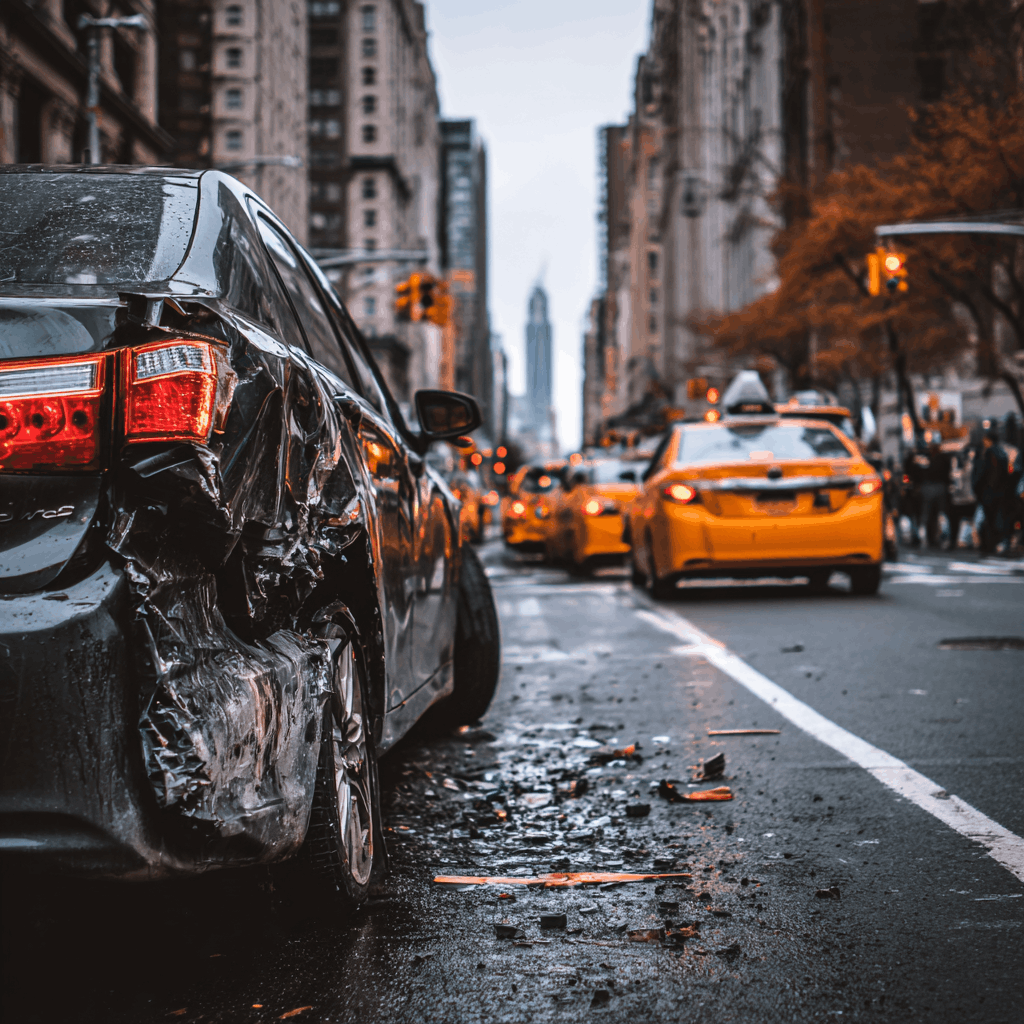
Distracted driving causes most rear-end collisions, accounting for up to 87% of these crashes, according to National Transportation Safety Board data. When drivers take their eyes off the road to text, adjust their GPS, or handle other distractions, they miss critical moments when traffic slows or stops ahead. Tailgating, following too closely, ranks as the second leading cause, leaving drivers without enough time or space to stop safely.
Other major factors include speeding, which reduces reaction time and increases impact force, along with weather conditions like rain or fog that make roads slippery and reduce visibility. Driver fatigue and impairment from alcohol or drugs also play significant roles, as does mechanical failure like worn brake pads or broken brake lights that prevent proper stopping or warning signals.
This guide explains the most common causes of rear-end collisions in New York City, who’s typically at fault, and what steps you should take if you’re involved in one of these crashes, including when to consult car accident attorneys.
What Are the Most Common Causes of Rear-End Collisions in NYC?
New York City’s busy streets create perfect conditions for rear-end accidents. Between heavy traffic, construction zones, and constant distractions, drivers face challenges that don’t exist in quieter areas.
Distracted Driving
Distracted driving means anything that takes your attention away from the road. There are three types of distraction that can lead to a crash.
- Visual distraction: Taking your eyes off the road to look at your phone, GPS, or something else.
- Manual distraction: Taking your hands off the wheel to eat, text, or adjust controls.
- Cognitive distraction: Letting your mind wander even when your eyes are on the road.
Common distractions in NYC include texting while stuck in traffic, checking subway delay apps, eating during long commutes, and adjusting GPS when traffic forces you to take alternate routes. Even a quick glance at your phone can cause you to miss when the car ahead stops suddenly.
Tailgating and Unsafe Following Distance
Tailgating means driving too close to the car in front of you. This leaves you no time to stop if they brake suddenly. The three-second rule gives you enough space to react safely, pick a landmark and count the seconds between when the car ahead passes it and when you do.
NYC traffic makes tailgating tempting because everyone wants to prevent other cars from cutting in. But on highways like the FDR Drive and West Side Highway, following too closely causes countless rear-end crashes every year.
Speeding and Sudden Stops
Speeding reduces your stopping distance and reaction time dramatically. In a city full of pedestrians, traffic lights, and unexpected obstacles, even going five miles over the limit can be dangerous.
Sudden stops happen constantly in NYC, for pedestrians, yellow lights, double-parked cars, and emergency vehicles. If you’re speeding or not paying attention, these sudden stops can catch you completely off guard.
Weather and Road Conditions
Rain makes roads slippery and reduces how well your tires grip the pavement. This means you need more distance to stop safely. NYC gets plenty of rain throughout the year, and many drivers don’t adjust their following distance when conditions change.
Potholes, construction zones, and uneven pavement can force drivers to brake unexpectedly. When the car behind isn’t prepared, a rear-end collision becomes almost inevitable.
Driver Impairment and Fatigue
Alcohol and drugs slow your reaction time and impair your judgment. Even legal medications can make you drowsy or less alert behind the wheel.
Fatigue is just as dangerous as being drunk. NYC never sleeps, and many people drive after working long shifts or staying up all night. Drowsy driving causes thousands of accidents every year because tired drivers can’t react quickly enough to avoid crashes.
Mechanical Failures and Brake Lights
Sometimes the problem isn’t the driver, it’s the car. Worn brake pads can fail when you need them most. Bald tires lose traction on wet roads and can’t stop effectively.
Broken brake lights are especially dangerous because they give the driver behind you no warning that you’re stopping. If your brake lights don’t work, other drivers have no way to know you’re slowing down until it’s too late.
Heavy Traffic and NYC Hot Spots
Certain areas in New York City see more rear-end collisions because of heavy traffic and confusing road designs.
| Location | Why It’s High Risk |
| Lincoln Tunnel Approach | Constant merging and sudden stops from heavy traffic |
| Brooklyn Bridge Exits | Lane changes and confused tourists cause unexpected braking |
| Times Square Area | High pedestrian traffic forces frequent sudden stops |
| JFK/LGA Airport Routes | Rushed and unfamiliar drivers create dangerous conditions |
Who Is at Fault in a Rear-End Collision in New York?
The rear driver is usually at fault in a rear-end collision. New York law says every driver must maintain a safe following distance and be ready to stop. This means if you hit someone from behind, you’re probably going to be held responsible.
But this isn’t always the case. New York uses comparative negligence, which means fault can be shared between drivers. If the front driver did something wrong that contributed to the crash, they might be partially responsible too.
Are There Exceptions to Rear Driver Fault?
Yes, there are situations where the front driver can be held fully or partially responsible for the crash. These exceptions require strong evidence to prove.
- Sudden reversal: The lead driver backs up unexpectedly.
- Brake checking: The lead driver slams their brakes on purpose to cause a crash.
- Broken brake lights: The lead driver’s brake lights don’t work, giving you no warning.
- Unsafe lane changes: The lead driver cuts in front of you without enough space.
- Stopped in traffic: The lead driver stops in a travel lane without hazard lights.
Proving these exceptions takes evidence like witness statements, video footage, and expert accident reconstruction.
How Does New York’s No-Fault Insurance Work After a Rear-End Crash?
New York is a no-fault state. This means your own car insurance pays for your medical bills and lost wages after an accident, no matter who caused it. This coverage is called Personal Injury Protection or PIP.
No-fault insurance exists to get you medical care quickly without waiting for lawyers and insurance companies to figure out who was at fault. Your insurance company handles your immediate expenses while the fault question gets sorted out separately.
When Can You Go Beyond No-Fault for a Rear-End Collision in NYC?
You can only sue the other driver for pain and suffering if your injuries meet New York’s “serious injury” threshold. This is a legal standard that separates minor injuries from severe ones that have a lasting impact on your life.
Serious injuries include broken bones, permanent scars, significant limitation of a body part, or injuries that prevent you from doing normal activities for at least 90 days. If your injuries qualify, you can pursue compensation for pain, suffering, and economic losses that exceed your no-fault benefits.
What Injuries Are Common After a Rear-End Collision?
Even low-speed rear-end crashes can cause significant injuries because of the sudden force that snaps your body forward and backward.
- Whiplash: The most common injury, affecting neck muscles and ligaments from the sudden movement.
- Concussions: Your brain can hit the inside of your skull during impact, causing traumatic brain injury.
- Back injuries: Herniated discs and spinal damage from the force of the collision.
- Psychological trauma: Many people develop anxiety about driving or PTSD after a serious crash.
You need to see a doctor immediately after any rear-end collision, even if you feel fine. Some serious injuries don’t show symptoms for hours or days after the crash.
What Evidence Proves Distraction or Tailgating in NYC?
Building a strong case requires evidence that shows exactly what the other driver did wrong. We know where to look for the proof needed to hold negligent drivers accountable.
- Cell phone records: These show if the other driver was texting or talking at the time of the crash.
- Surveillance footage: NYC has thousands of cameras that often capture accidents as they happen.
- Witness statements: Other drivers, passengers, and pedestrians can describe what they saw.
- Vehicle data: Many modern cars have “black boxes” that record speed and braking information.
- Damage patterns: The way the cars are damaged tells a story about speed and impact.
The sooner you contact a lawyer, the better chance we have to preserve this evidence before it disappears.
What Should You Do After a Rear-End Collision in NYC?
The minutes after a crash are confusing and stressful, but taking the right steps protects both your health and your legal rights.
Steps to Protect Your Health and Claim
- Call 911 immediately. Get police and paramedics to the scene, even for minor crashes.
- Get medical attention. See a doctor even if you feel fine, some injuries have delayed symptoms.
- Document everything. Take photos of vehicle damage, the accident scene, and any visible injuries.
- Exchange information. Get the other driver’s license, insurance, and contact information.
- Report to the DMV. If your vehicle sustains significant damage, file a report with the DMV promptly.
- Call your insurance company. Start your no-fault claim as soon as possible.
- Don’t give recorded statements. The other driver’s insurance company will try to get you to say things that hurt your case.
How Long Do You Have to File a Rear-End Accident Claim in NY?
You have three years from the accident date to file a personal injury lawsuit in New York. But other deadlines come much sooner and can be just as important.
You must file for no-fault benefits within 30 days of the crash. If you are filing a claim against a government entity such as New York City, you have only 90 days to file a notice of claim. Missing these deadlines can cost you thousands of dollars in compensation, potentially affecting the average personal injury settlement amounts you might receive.
The sooner you act, the better your chances of a successful claim. Evidence disappears, witnesses forget details, and insurance companies start building their defense immediately.
Rear-ended in NYC? Get a Free Case Review 24/7
If you were injured in a rear-end collision, you don’t have to face the insurance companies alone. At Grigor Law Injury & Car Accident Lawyers, we fight for accident victims across all five boroughs and surrounding counties.
Chrissy Grigoropoulos has built a reputation as a fierce courtroom advocate who prepares thoroughly and fights tirelessly for her clients. We’re available 24/7 because legal emergencies don’t wait for business hours.
Our team speaks Spanish, Greek, French-Creole, and Korean, so you can get help in the language you’re most comfortable with. We work on a contingency fee basis, you pay nothing unless we win your case
Rear-End Collision FAQ
Is Distracted Driving the Main Cause of Rear-End Collisions?
Yes, driver distraction or inattention is the primary factor in about 90% of rear-end collisions. Texting, phone calls, and other distractions prevent drivers from noticing when traffic stops ahead.
Is the Rear Driver Always at Fault in New York?
Usually, but not always. If the front driver was negligent—like brake checking or having broken brake lights—they can be held partially or fully responsible for the crash.
Does No-Fault Cover My Medical Bills and Lost Wages?
Yes, your own no-fault insurance covers initial medical expenses and a portion of lost income up to your policy limits, regardless of who caused the crash.
When Can I Sue for Pain and Suffering After a Rear-End Crash?
You can only sue for pain and suffering if your injuries meet New York’s “serious injury” threshold, such as fractures, permanent limitations, or injuries that prevent normal activities for 90+ days.
How Do I Prove the Other Driver Was Texting or Tailgating?
Evidence like cell phone records, surveillance footage, witness statements, and vehicle data recorders can prove the other driver was negligent when they caused your crash.
What Is the Deadline to File a Lawsuit in New York?
The general deadline is three years from the accident date, but no-fault claims must be filed within 30 days and claims against government entities within 90 days.
Can I Still Recover if Weather Contributed to the Crash?
Yes, all drivers must adjust their driving for weather conditions. The at-fault driver can still be held responsible even if rain or snow was a contributing factor.