(718) 249-7447
 Call Us Now


Worried about poor care at your loved one’s nursing home? You can sue a nursing home for negligence in New York. The state gives you multiple legal options to hold facilities accountable when they fail to provide proper care, including negligence claims, medical malpractice lawsuits, and special protections under New York Public Health Law § 2801-d.
Nursing home negligence happens when facilities or their staff fail to meet the standard of care residents deserve, whether that’s preventing bedsores, providing adequate nutrition, or ensuring basic safety. You have the right to seek compensation for medical bills, pain and suffering, and other damages when negligence harms your loved one. New York law also allows punitive damages in cases involving willful or reckless conduct.
This guide explains your legal rights, what evidence you need, how to prove negligence, and the steps to take if you suspect your loved one is being harmed.
What Is Nursing Home Negligence in New York?
Nursing home negligence is when a facility or its staff fails to provide the care a resident needs, causing harm. This means not giving proper medical attention, food, hygiene help, or safety protection that every resident deserves.
Negligence is different from abuse, though both can hurt residents. Neglect happens when staff doesn’t act, like forgetting to turn a bedridden patient to prevent sores. Abuse is when someone intentionally hurts a resident, like hitting or yelling at them.
Both neglect and abuse give you the right to sue in New York. If a licensed medical professional like a doctor or nurse caused the harm, you might have a nursing home malpractice case instead of just a negligence claim.
Can You Sue a Nursing Home for Negligence in New York?
Yes, you absolutely can sue a nursing home for negligence in New York. The law gives you the right to hold facilities accountable when they harm your loved one through poor care.
You have several legal options depending on what happened:
- Common-law negligence claim: When staff fail to provide reasonable care that any competent facility would give.
- Medical malpractice claim: When a licensed medical professional’s care falls below accepted standards.
- Statutory claim under NY Public Health Law § 2801-d: A special New York law that protects residents’ rights to proper care, safety, and dignity.
A New York nursing home neglect lawyer can review your situation and determine which legal path gives you the strongest case. Many families don’t realize they have multiple ways to seek justice for their loved one.
Who Can File a Nursing Home Lawsuit in New York?
The resident who was harmed has the primary right to file a lawsuit. But we understand that many nursing home residents can’t take legal action themselves due to illness, dementia, or other health problems.
If your loved one can’t file the lawsuit themselves, these people can do it for them:
- Legal guardian: Someone the court appointed to make decisions for the resident.
- Power of attorney: A person the resident chose to handle their legal matters.
- Estate representative: If the resident died, the executor or administrator of their estate can file a wrongful death lawsuit.
You don’t need to feel helpless if your loved one can’t speak for themselves. The law recognizes that families often need to step in and fight for proper care.
What Must You Prove in a Nursing Home Negligence Case?
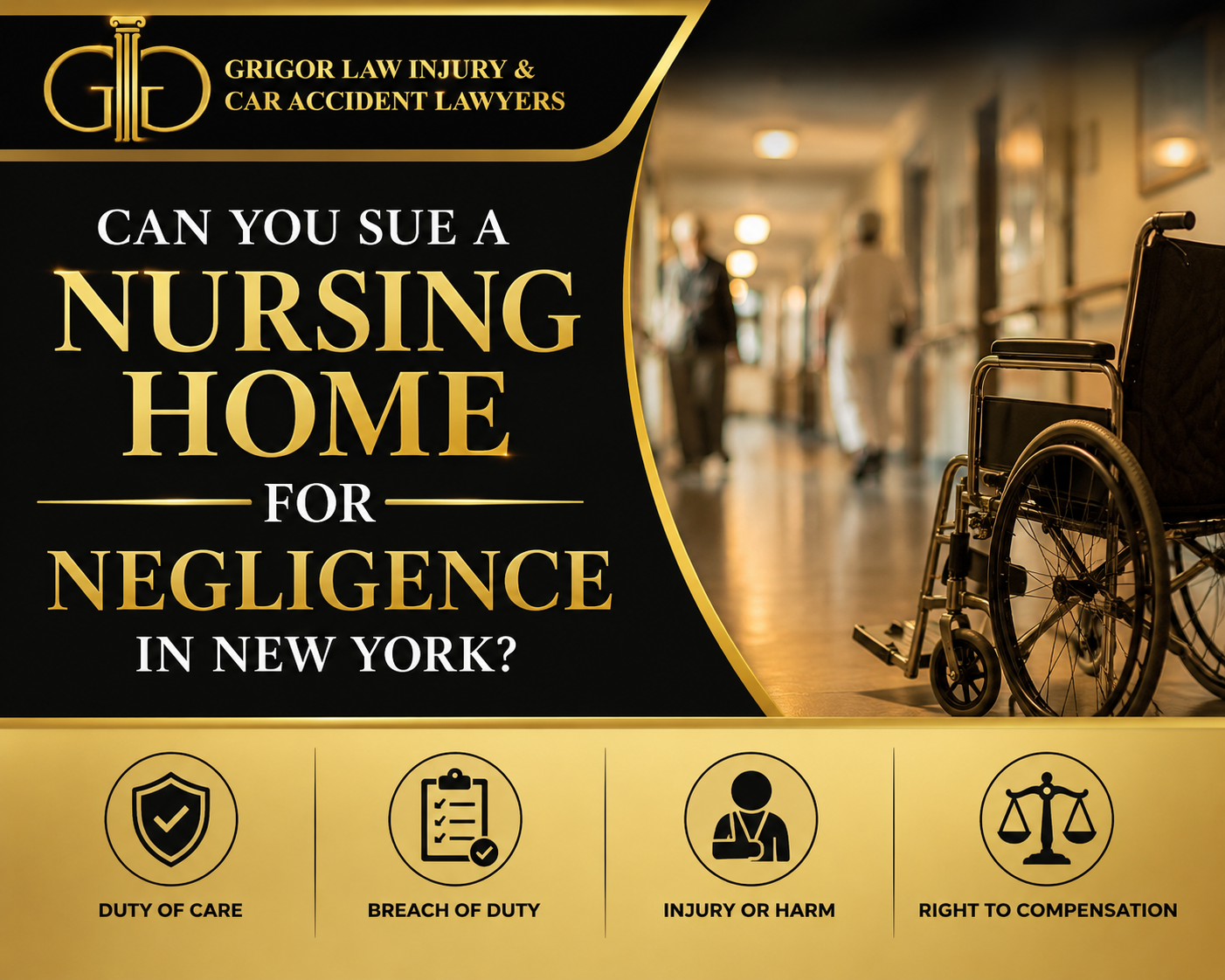
To win a negligence case, you need to prove four things happened. Think of these as the building blocks that make your case strong.
Duty of care means the nursing home had a legal responsibility to keep your loved one safe. For example, they must turn bedridden patients every two hours to prevent painful pressure sores from forming.
Breach of duty means the facility failed to meet that responsibility. If staff left your loved one in the same position for an extended period, that may constitute a breach of their duty of care.
Causation connects the facility’s failure directly to your loved one’s injury. You must show that leaving them in one position for too long directly caused the stage 3 pressure ulcer that developed.
Damages means your loved one suffered real harm, physical pain, emotional distress, or costs like extra medical bills. Without actual harm, there’s no case even if the facility made mistakes.
These four elements work together to prove the nursing home’s negligence caused your loved one’s suffering.
What New York Law Protects Nursing Home Residents?
New York gives residents extra protection through Public Health Law § 2801-d. This law is powerful because it’s specifically designed to protect nursing home residents from the deprivation of their rights.
Under this law, you can sue if a facility deprives your loved one of any right or benefit they’re entitled to receive. This means proper medical care, adequate food, help with daily activities, or basic dignity and respect.
The best part about this law is that you don’t have to prove the facility meant to cause harm. You only need to show they violated a right, and your loved one got hurt as a result.
If the facility’s conduct was willful or reckless, this law also allows punitive damages. These are extra money awards designed to punish the wrongdoer and prevent future negligence.
A New York nursing home injury attorney who knows this law can build a strong case that holds facilities accountable for failing residents.
What Evidence Helps Prove Nursing Home Negligence?
Strong evidence makes the difference between winning and losing your case. The more documentation you have, the harder it becomes for the facility to deny that they caused harm.
The most important evidence includes:
- Medical records and care plans: These show what care was supposed to happen versus what actually occurred.
- Photos and videos: Visual proof of injuries, bedsores, or unsafe conditions speaks louder than words.
- Incident reports: Official reports the facility filed about accidents or problems.
- Staffing records: These can prove the facility was understaffed when your loved one was harmed.
- Witness statements: Other residents, family members, or staff who saw what happened.
You should also get copies of the New York State Department of Health inspection reports. These government documents often reveal patterns of problems at the facility that strengthen your case.
A nursing home abuse attorney in NYC can issue legal demands to preserve critical evidence like surveillance footage and electronic records that you can’t get on your own. Acting quickly prevents the facility from destroying or hiding important proof.
What Are the Warning Signs of Neglect or Abuse?
Neglect often starts small but gets worse over time. Trust your instincts; if something feels wrong during visits, it probably is.
Watch for these red flags:
- Physical signs: Bedsores, unexplained bruises, cuts, or weight loss.
- Hygiene problems: Dirty clothes, unwashed hair, or strong odors.
- Medical issues: Untreated infections, dehydration, or medication errors.
- Safety concerns: Frequent falls, broken equipment, or unanswered call buttons.
- Behavioral changes: Your loved one becomes fearful, withdrawn, or anxious around staff.
Some facilities try to hide problems by scheduling family visits during their best-staffed hours. Try visiting at different times, including evenings and weekends, to get a complete picture of the quality of care.
If you notice any warning signs, document them immediately and take action to protect your loved one.
What Should You Do Right Now if You Suspect Neglect?
Time is critical when you suspect neglect. Acting fast protects your loved one’s health and preserves evidence for a potential lawsuit.
Document the Neglect and Preserve Evidence
Start keeping a detailed log with dates, times, and specific descriptions of what you observe. Take clear, dated photos of any injuries, bedsores, or unsafe conditions you see.
Save every email, text message, and written communication you have with facility staff or management. These conversations often contain admissions that help prove your case later.
Get Prompt Medical Evaluation
Take your loved one to an independent doctor or emergency room for a complete medical evaluation. This creates an official medical record from a source outside the nursing home.
Emergency care is especially important for serious conditions like infected bedsores, severe dehydration, or signs of sepsis. Quick medical attention can save your loved one’s life and provides crucial evidence.
Report Concerns to the New York State Department of Health
File an official complaint with the state health department’s nursing home complaint program. This triggers an independent investigation and creates a public record of the facility’s failures.
Reporting to the state doesn’t replace filing a lawsuit—you can and should do both. Government investigations often uncover additional evidence that strengthens your legal case.
Contact a New York Nursing Home Negligence Lawyer
An experienced nursing home attorney in New York can immediately send a preservation letter to stop the facility from destroying evidence. We know which documents and records to demand before they disappear.
Don’t wait to get legal help. Evidence disappears quickly, and facilities often try to cover up problems once they know families are considering legal action.
What Compensation Can You Recover?
No amount of money can undo the harm your loved one suffered, but compensation helps cover costs and holds the facility accountable for their failures.
| Damage Type | What It Covers |
| Economic Damages | Medical bills, rehabilitation costs, moving expenses, and funeral costs |
| Non-Economic Damages | Pain and suffering, emotional distress, and loss of dignity |
| Punitive Damages | Extra money to punish willful or reckless conduct under § 2801-d |
| Wrongful Death Damages | Funeral expenses, loss of companionship, and pre-death suffering |
Every case is different, and honest lawyers won’t promise specific dollar amounts. We provide realistic assessments based on the facts of your situation and similar cases we’ve handled.
The goal isn’t just money; it’s justice for your loved one and preventing other families from going through the same pain.
How Long Do You Have to Sue in New York?
New York law sets strict deadlines called statutes of limitations for filing lawsuits. Missing these deadlines usually means losing your right to sue forever.
The time limits depend on the type of case:
- Negligence claims: Generally, the statute of limitations is 3 years from the date of injury.
- Medical malpractice claims: Generally, two years and six months from the date of the malpractice.
- Wrongful death claims: Generally, two years from the date of death.
Special rules apply if the nursing home is owned by a city or municipality. You may have only 90 days to file a Notice to bring a Notice of Claim before you can sue these government-run facilities.
Don’t wait to contact attorneys for nursing home neglect. Starting the legal process early gives us time to investigate thoroughly and build the strongest possible case.
Why Choose Grigor Law Injury & Car Accident Lawyers for Your Nursing Home Case?
Grigor Law combines fierce courtroom advocacy with genuine compassion for families facing these difficult situations. The firm was founded by Chrissy Grigoropoulos, Esq., a trial-tested attorney recognized as a Top 40 Under 40 Rising Star.
Chrissy has also been named one of the 10 Best Female Attorneys for Client Satisfaction by the American Institute of Personal Injury Attorneys. Her courtroom skills and dedication to clients make her a formidable advocate against nursing home corporations.
The firm offers several advantages that matter to families:
- 24/7 availability: Legal emergencies don’t wait for business hours.
- Multilingual service: Staff speaks Spanish, Greek, French-Creole, and Korean.
- Contingency fees: You pay nothing unless we win your case.
- Broad coverage: We handle cases across all five boroughs, Nassau, Suffolk, and Westchester counties.
Grigor Law understands that nursing home negligence cases involve more than legal issues; they involve families fighting for their loved ones’ dignity and safety.
Speak With a New York Nursing Home Negligence Lawyer Today
Your loved one trusted the nursing home to provide proper care and keep them safe. When facilities break that trust through negligence, you have the right to demand justice and accountability.
Don’t face this fight alone. Grigor Law has the experience and determination to take on nursing home corporations and their insurance companies.
Contact us today for a free, no-pressure consultation. We’ll listen to your story, answer your questions, and explain your legal options in plain language. Call us 24/7 or fill out our online contact form to get the help your family needs.
Frequently Asked Questions
Is It Hard to Sue a Nursing Home for Negligence in New York?
These cases can be challenging because facilities often have teams of lawyers defending them. However, with strong evidence and an experienced nursing home neglect lawyer in NYC, you can hold facilities accountable and win compensation.
Does an Arbitration Agreement Stop Me From Suing?
Not necessarily. Many arbitration clauses in nursing home admission agreements are not legally enforceable in New York. You should have an attorney review any documents your loved one signed to determine if the arbitration clause is valid.
Can I Sue if My Loved One Has Dementia or Has Passed Away?
Yes, you can still pursue legal action. If your loved one has dementia, a legal guardian or person with power of attorney can file the lawsuit. If your loved one has passed away, the representative of their estate can file a wrongful death claim.
Can I Sue a Municipal or State-Run Nursing Home in New York?
Yes, but special rules apply to government-owned facilities. You typically must file a Notice of Claim within 90 days and follow shorter deadlines. Contact an attorney immediately if a government-run facility harmed your loved one.
Will the Nursing Home Retaliate if We Report Neglect?
Retaliation against residents or their families for reporting neglect is illegal under both New York and federal law. If a facility tries to retaliate, an attorney can take immediate legal action to protect your loved one.
What Does It Cost to Hire Grigor Law Injury & Car Accident Lawyers?
There are no upfront costs to hire our firm. We handle nursing home negligence cases on a contingency fee basis, which means we only get paid if we successfully recover compensation for your family.