(718) 249-7447
 Call Us Now


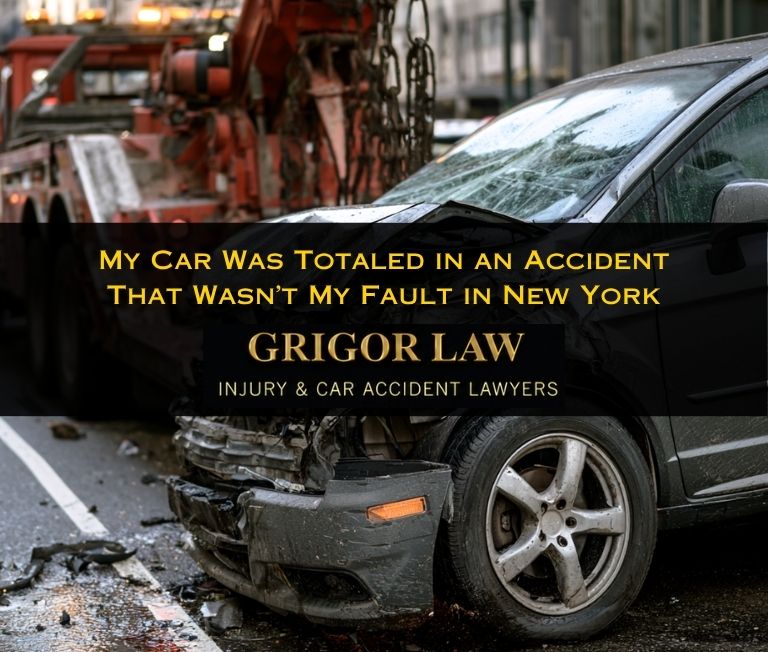
If your car was totaled in a New York City accident that wasn’t your fault, you are entitled to the Actual Cash Value of your car, a rental while your claim is resolved, and money for injuries that meet New York’s legal threshold.
The at-fault driver’s insurance covers your car, your No-Fault insurance pays medical bills and lost wages up to $50,000, and a lawsuit can recover your pain and suffering.
The process confuses many people because several different insurance policies are involved at once, each with its own rules, deadlines, and paperwork. Missing the 30 day window to file your No-Fault application, or cashing a settlement check too soon, can permanently cut off benefits you are entitled to.
Without knowing how New York calculates Actual Cash Value or when you can sue beyond No-Fault, many accident victims accept far less than their claim is worth.
In this article, you will discover how the total loss process works in New York City, how your vehicle’s Actual Cash Value is calculated, and how a New York City car accident attorney can help you recover every dollar you are owed.
What Is a Totaled Car in New York?
A total loss is when the cost to repair your car exceeds what the car is actually worth. New York insurers typically declare a vehicle totaled when repair costs reach approximately 75% or more of its Actual Cash Value.
ACV is what your car was worth on the open market the moment before the crash, not what you originally paid for it, and not what you still owe on your loan. This number is the foundation of everything the insurance company is required to pay you.
Who Pays When I Am Not at Fault?
When another driver causes the crash, your losses are covered through multiple sources, not just one. Understanding which pocket pays for what prevents costly mistakes.
- The at-fault driver’s liability insurance covers your totaled vehicle through a property damage claim.
- Your own No-Fault insurance covers your initial medical bills and lost wages, regardless of who caused the accident.
- Your own collision coverage serves as a backup if the at-fault driver’s insurer delays paying for your car.
Property Damage Claim against the Other Driver
A third-party property damage claim is what you file with the at-fault driver’s insurance company to recover the value of your car. This claim pays your vehicle’s ACV plus applicable sales tax and certain DMV fees, but it does not cover your medical bills or lost wages.
To open the claim, you will need the police report, photos of the accident and vehicle damage, repair estimates, and a copy of your title.
No-Fault PIP Pays Medical Bills and Lost Wages
New York is a No-Fault state, meaning your own insurance pays for your initial economic losses no matter who caused the crash. This benefit is called Personal Injury Protection (PIP), and it helps pay for medical expenses and a portion of your lost wages while you recover.
PIP never covers vehicle damage, that is always a completely separate claim handled through a separate process.
Collision Coverage and Your Deductible
If your policy includes collision coverage, you can file directly with your own insurer to get paid faster rather than waiting on the at-fault driver’s company. You will pay your deductible upfront, but your insurer will then pursue the at-fault carrier through subrogation, the legal process of recovering what they paid on your behalf, and return your deductible once they succeed.
How Is My Total Loss Value Calculated?
Insurance companies calculate your ACV by researching recent sales of comparable vehicles in the local market, then adjusting for your car’s mileage, pre-accident condition, and features. The problem is that adjusters frequently pull comps from outside New York City, where cars are cheaper, to push your offer down.
Your settlement should include more than just the base vehicle value:
- Sales tax: New York requires the insurer to include applicable sales tax so you are not paying it out of pocket when you buy a replacement.
- Title and registration fees: The DMV fees for retitling and registering your replacement vehicle must be part of the settlement.
- Aftermarket upgrades: Permanent modifications like custom wheels or upgraded audio systems can be added to the valuation with receipts.
- Trim and option packages: Navigation systems, leather interiors, all-wheel drive, and premium packages must be reflected in the offer, not the base model price.
Do I Get a Rental Car after My Car Is Totaled?
Yes. You are entitled to a rental car from the at-fault driver’s insurance company while your property damage claim is being resolved. If you do not need a rental, you can instead request a “loss of use” payment, a cash amount for the days you were left without transportation.
The rental class must be reasonably comparable to your totaled vehicle.
How Long the Insurer Must Pay
The at-fault insurer covers your rental from the date of the accident through a reasonable period after you accept the total loss settlement, which typically includes a few extra days to locate and purchase a replacement.
What If Liability Is Disputed?
If the other driver’s insurance company is stalling by disputing fault, you can activate your own policy’s rental reimbursement coverage in the meantime. Your insurer will recover those rental costs from the at-fault carrier once liability is resolved.
Rideshare and Delivery Drivers
If you drove for Uber, Lyft, DoorDash, or another platform, your lost income during the time your car is unavailable may be recoverable as part of your claim. Commercial use of your vehicle can also affect the class of rental you are entitled to receive.
What to Do after a Total Loss in New York City
The steps you take immediately after the accident directly affect how much compensation you receive. Move quickly and follow this plan:
- File No-Fault within 30 days. In New York, you have 30 days from the accident date to file an NF-2 No-Fault application with your own insurer. Miss this deadline and your medical and wage benefits can be denied permanently.
- Secure the police report and all evidence. Request the MV-104 accident report from the NYPD and hold onto every photo, dashcam clip, and witness contact you gathered at the scene, evidence disappears quickly.
- Decline the recorded statement. The at-fault driver’s adjuster will call you within days asking for a recorded statement. They are trained to find information that reduces what they owe you, politely decline until you have spoken with an attorney.
- Do not accept the first settlement check. A fast offer might feel like relief, but cashing it typically means signing a release of all your claims, including future injury claims whose full value you may not yet understand.
Can I Sue Beyond No-Fault in New York?
No-Fault PIP has a hard $50,000 cap and covers nothing for pain and suffering. If your injuries are serious, you have the right to step outside the No-Fault system and sue the at-fault driver directly, but your injuries must first clear New York’s legal threshold.
The Serious Injury Threshold under Insurance Law § 5102(d)
New York Insurance Law § 5102(d) defines a serious injury as a fracture, significant disfigurement, permanent limitation of a body organ or member, or any injury that prevents you from performing substantially all of your normal daily activities for at least 90 of the first 180 days following the accident.
Our New York City personal injury lawyers build your medical record from day one with this standard in mind.
Pain and Suffering and Economic Losses
A personal injury lawsuit lets you recover two types of compensation:
- General damages cover non-economic harm, the physical pain, emotional distress, and mental anguish the accident caused you.
- Special damages cover measurable financial losses, medical bills beyond your PIP cap, future medical care you will need, and lost earning capacity going forward.
What If the Other Driver Is Uninsured or Fled the Scene?
If the at-fault driver had no insurance or drove off before you could get their information, you still have a clear path to compensation. Your own policy was designed for exactly this situation.
Uninsured Motorist Coverage
Your policy’s Uninsured Motorist (UM) coverage steps in when the at-fault driver carries no insurance. If they have some coverage but not enough to fully compensate you, Supplemental Underinsured Motorist (SUM) coverage bridges the gap.
MVAIC for Hit-and-Run Victims
The Motor Vehicle Accident Indemnification Corporation (MVAIC) is a New York State fund that compensates accident victims who cannot access recovery through a standard insurance claim. If the driver who hit you fled the scene, you may qualify. However, you must notify MVAIC within 90 days of the accident or you will lose your right to file.
How Long Do I Have to File in New York?
New York law sets strict deadlines, called statutes of limitations, for each type of claim. Miss any one of them and your right to recover disappears permanently.
| Claim Type | New York Deadline |
| No-Fault (PIP) Application | 30 days from crash |
| Property Damage Lawsuit | 3 years |
| Personal Injury Lawsuit | 3 years |
| MVAIC Hit-and-Run Notice | 90 days |
| Claim against a City or Municipal Vehicle | 90-day Notice of Claim |
The clock starts the moment the accident happens, not the day you realize how serious your injuries are.
How We Fight Lowball Offers at Grigor Law
Insurance companies are not on your side. Their adjusters are trained to close your claim as cheaply as possible, and their first offer is built around protecting their bottom line, not your recovery.
At Grigor Law Injury & Car Accident Lawyers, we challenge undervalued ACV offers with our own market research and demand a formal appraisal when their numbers do not hold up. We recover every dollar that belongs to you, storage fees, towing costs, rental reimbursement, and diminished value where the law allows.
While the property damage claim moves forward, we are building your injury case in parallel, collecting the medical evidence needed to clear New York’s serious injury threshold and maximizing every available dollar of compensation.
The insurance companies know we take cases to trial, and that readiness forces fair negotiations. Since 2015, we have served clients across all five boroughs, Long Island, and Westchester County from our offices in Ridgewood, The Bronx, and Hempstead. Every case is handled on contingency, you pay nothing unless we win your recovery. If you cannot come to us, we will come to you.
Contact us today for a free consultation.
Frequently Asked Questions
Do I Have to Pay My Deductible If I Was Not at Fault?
If you file through your own collision coverage, you must pay your deductible upfront. Once your insurer recovers that amount from the at-fault driver’s carrier through subrogation, it will be refunded to you in full.
Can I Claim Diminished Value for a Totaled Car in New York?
Diminished value, the drop in your car’s resale worth after it has been in an accident, is generally not recoverable in New York when the vehicle is declared a total loss. Your compensation is limited to the car’s Actual Cash Value before the crash.
What Happens to My Car Loan If My Financed Vehicle Is Totaled?
The settlement check is typically made payable to both you and your lender. If you owe more than the car’s ACV, you are responsible for the difference unless you have gap insurance, which is specifically designed to cover that shortfall.
Can I Recover for Personal Property Damaged in the Crash?
Personal items inside your vehicle, a laptop, a child’s car seat, a phone, are not part of the property damage claim for your car itself. You may be able to recover for them through the at-fault driver’s liability coverage or through your own renter’s or homeowner’s insurance policy.
Can I File a Claim as a Passenger in the Totaled Car?
Yes. As an injured passenger, you can file a No-Fault claim with the insurer of the vehicle you were riding in and also pursue a personal injury lawsuit against any driver who was at fault for the crash.
Does a DUI or Hit-and-Run Automatically Prove the Other Driver Was at Fault?
Evidence of a DUI or fleeing the scene is extremely powerful, but it does not automatically establish 100% liability under New York law. We still must prove how that driver’s specific actions directly caused the accident and your resulting damages.
What If I Was Partly at Fault for the Accident?
New York follows a pure comparative negligence rule, which means your total compensation is reduced by your share of fault, but you are not barred from recovering. If you were 20% responsible, you can still collect 80% of your total damages.