(718) 249-7447
 Call Us Now



Insurance companies use predictable tactics to devalue car accident claims in New York City, from lowball offers, recorded statements, disputing your medical treatment, monitoring your social media, or inflating your share of the fault to shrink your payout.
Understanding this playbook, and your rights under New York’s no-fault and serious injury rules, is the first step toward protecting the compensation you deserve.
What Insurance Company Tactics Devalue NYC Car Accident Claims?
Insurance companies follow the same playbook on every claimant. The adjuster calling you is not working alone; they have a supervisor, a claims system, and a legal team all focused on one goal: minimizing your payout. Once you recognize these tactics, you stop falling for them.
Quick Lowball Offers Before You Know Your Case’s Value
A settlement check that arrives within days of the crash is not goodwill; it is a calculated move to close your claim before you understand how serious your injuries are. Once you sign that release, your claim is permanently closed, even if your condition gets significantly worse.
Recorded Statements Used to Twist Your Words
The other driver’s insurer will call and ask to record a conversation “for their records.” Their adjuster will use subtle, leading questions, “You’re mostly feeling okay now, right?” to get you on tape, minimizing your injuries. You are not legally required to give a recorded statement to the other driver’s insurer.
Broad Medical Releases That Expose Your Full History
The insurer will send you a medical authorization form with language like “any and all medical records.” Signing it gives them access to your entire medical history, not just records connected to this accident.
Their goal is to find any old injury or prior condition they can use to argue your pain predates the crash.
IMEs and EUOs Designed to Cut Off Your Benefits
An Independent Medical Examination (IME) is a medical evaluation arranged and paid for by your insurer, not your own doctor. An Examination Under Oath (EUO) is a formal, recorded interview conducted by the insurer’s attorney.
The word “independent” is misleading; both tools are routinely used to justify cutting off your no-fault medical benefits and wage payments.
Pre-Existing Conditions Used to Deny Your Injuries
If an adjuster finds a prior injury in your records, they will argue it, not the crash, is the real cause of your pain. New York law pushes back. The eggshell plaintiff rule holds that the at-fault party is fully liable for aggravating any condition you had before the accident, they must take you exactly as they find you.
Comparative Negligence Used to Shrink Your Payout
New York follows pure comparative negligence, which means you can recover compensation even if you were partly at fault for the crash. Your award is reduced by your percentage of blame, but insurers routinely inflate that number to reduce what they owe you, even in cases where their driver was clearly responsible.
Delays Designed to Create Financial Pressure
When the adjuster says your claim is “still under review” for weeks on end, that is usually strategy, not a clerical backlog. Deliberate delays put financial pressure on you until you accept a low offer or until you unknowingly miss a critical legal deadline.
Light Vehicle Damage Used to Dismiss Serious Injuries
An adjuster will point to a minor dent and argue it proves you were not seriously hurt. Modern vehicles are built to absorb collision force, which often means the car looks fine while your neck, spine, or skull takes the full impact. Serious injuries happen in low-speed collisions every day.
How Insurers Use Surveillance and Social Media Against You
Insurers hire investigators and monitor accident victims on Facebook, Instagram, and TikTok. A single photo of you at a family event, taken out of context, can be used to argue your injuries are exaggerated. Lock every profile to private and stop posting until your case is resolved.
How Adjusters Minimize Pain and Suffering
Your claim has two types of damages. Special damages cover economic losses with a price tag, medical bills, lost wages, and out-of-pocket expenses. General damages cover non-economic harm like pain, suffering, and mental anguish. Because there is no receipt for suffering, adjusters will always push to minimize or dismiss this part of your claim.
A tactic our New York City car accident lawyers see repeatedly from adjusters handling car accident claims across the five boroughs is minimizing pain and suffering the moment a claimant is treated and released from a hospital like Bellevue Hospital or Kings County Hospital without being admitted overnight.
Insurers point to that quick discharge as proof the injury was minor, even when the client later needs months of physical therapy or a surgical consult.
We routinely see this argument surface in settlement negotiations tied to crashes on Atlantic Avenue and Queens Boulevard, two of the most heavily traveled corridors in the city.
Adjusters rarely change their position on general damages until a case is prepared to go before a jury in Kings County Supreme Court or Queens County Supreme Court.
| Tactic | What It Looks Like | Your Move |
| Lowball offer | A check arrives within days of the crash | Never sign before knowing your full prognosis |
| Recorded statement | Adjuster asks to record your call | Decline, you are not required to comply |
| Blanket medical release | Authorization for “any and all” records | Do not sign, let your attorney control the scope |
| Deliberate delays | “Still under review” for weeks on end | Document every communication in writing |
| Social media monitoring | Unfamiliar friend requests appear | Lock all accounts to private immediately |
What Are Your Rights under New York’s No-Fault and Serious Injury Rules?
New York is a no-fault state. This means your own auto insurance covers your initial medical bills and a portion of your lost wages, up to $50,000, regardless of who caused the crash. You file for these benefits using an NF-2 form with your own insurer.
To sue the at-fault driver for pain and suffering, you must meet the serious injury threshold under New York Insurance Law § 5102(d). Your injury must be permanent, substantially limit a bodily function, or prevent you from carrying out your normal daily activities for an extended period after the crash.
Miss any of these deadlines and your case may be over before it starts:
- 30 days, file your NF-2 no-fault application with your own insurer after the crash.
- 90 days, file a Notice of Claim if a government vehicle, like an MTA bus, caused your accident.
- 3 years, file a personal injury lawsuit against the at-fault driver in New York.
What Steps Protect Your New York Claim Right Now?
Collect Evidence, Photographs, and Witness Contact Information
Photograph both vehicles, your visible injuries, and the scene from multiple angles before you leave. Get the responding officer’s report number, and if the crash caused injury, death, or more than $1,000 in property damage, file your own MV-104 crash report with the DMV within 10 days.
Collect names and phone numbers from any witnesses, and look for nearby security cameras on storefronts, MTA buses, and building entrances before footage is deleted.
See a Doctor Immediately and Follow Every Appointment
Getting medical attention within 24 to 48 hours of the crash is one of the most important steps to take after a car accident, even if you feel fine right now.
Injuries like concussions and herniated discs often take days to produce noticeable symptoms. Any gap between your accident and your first doctor visit is something the insurer will use against you, so go immediately and follow every recommended follow-up.
Never Give a Statement, Sign a Blanket Release, or Post about Your Case
Three mistakes damage more claims than almost anything else:
- Never give a recorded statement to the other driver’s insurer without your attorney present.
- Never sign a blanket medical release, it hands the insurer access to your entire medical history.
- Never post about your crash, your injuries, or your daily activities on any social media platform.
How a New York Car Accident Lawyer Flips the Leverage
Insurers behave very differently when they know your attorney is ready to take the case to a jury. At Grigor Law Injury & Car Accident Lawyers, we build every case from day one as if a verdict were the destination.
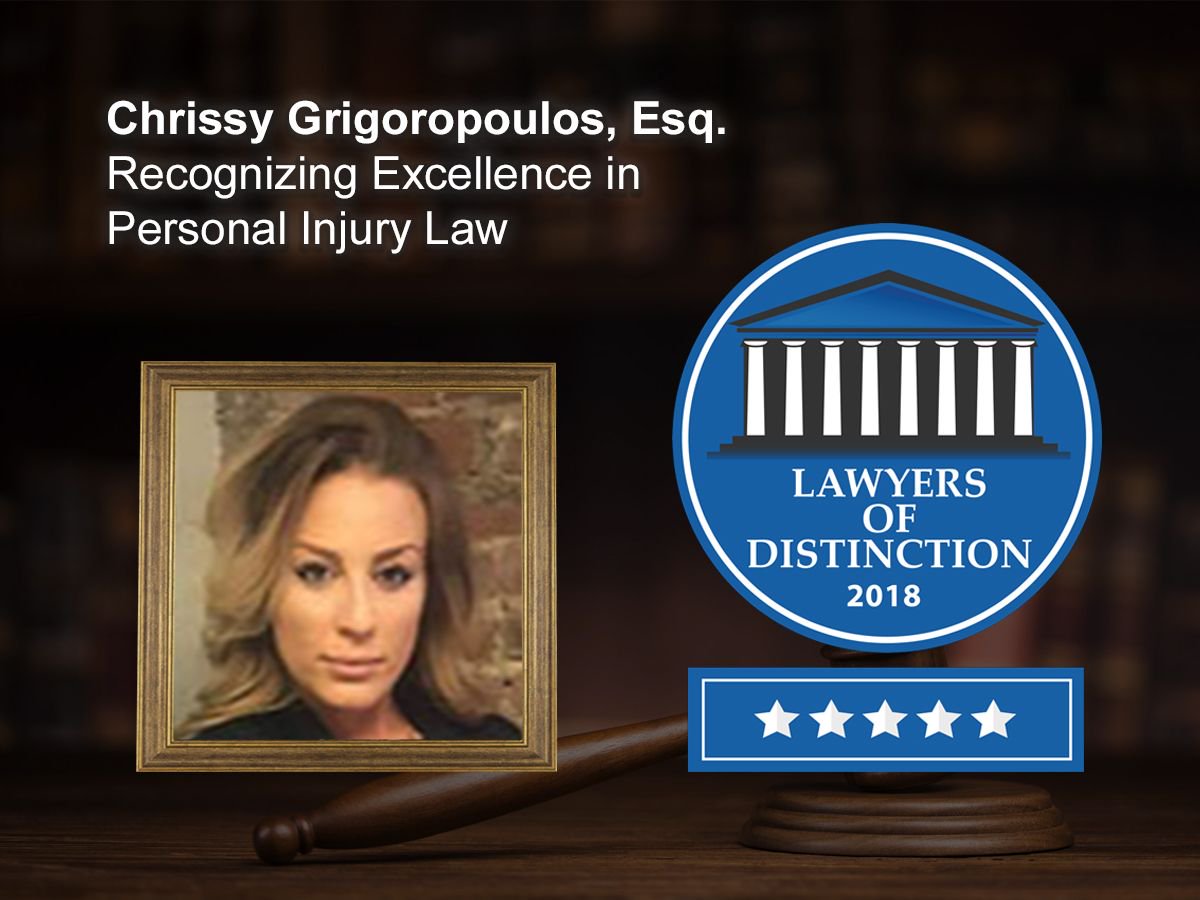
Our team, led by founding attorney Chrissy Grigoropoulos, Esq., brings a shark attitude to every case. We serve clients across all five boroughs and Long Island from our offices in Ridgewood, The Bronx, and Hempstead. If you cannot come to us, we come to you.
“The insurance companies know we will take a case to trial, and that changes what they are willing to pay.” Chrissy Grigoropoulos
We handle every case on a contingency-fee basis; you pay no attorney fees unless we recover money for you.
How We Calculate the True Value of Your Claim
We do not let an adjuster’s formula set the number on your case. We calculate your full general and special damages against actual New York verdicts and settlements, including future medical costs, long-term care needs, and your total loss of earning capacity.
How We Find Every Source of Recovery
Adjusters will not volunteer the existence of every coverage layer available to you. We investigate Supplemental Underinsured Motorist (SUM) coverage on your own policy, commercial and employer policies on other vehicles, and umbrella policies, because every dollar of available compensation matters to your recovery.
What we see across the car accident claims we handle throughout New York City is that adjusters rarely disclose every policy that could apply to a crash on the FDR Drive, the Grand Central Parkway, or Flatbush Avenue until our office sends a formal request for the declarations page.
Commercial vehicles registered to companies operating out of Queens or the Bronx frequently carry higher limits than the driver first admits to having. In our experience handling these claims across the boroughs, umbrella and SUM coverage often go unmentioned entirely unless an attorney specifically asks for them in writing. That gap is where a meaningful share of underpaid settlements comes from.
Protect Your Rights Now
Every day you wait, the insurance company has more time to build its case against you. Do not let them control the story of what happened.
Contact Grigor Law for a free consultation at our offices in Ridgewood, The Bronx, or Hempstead, or we will come to you. You pay nothing unless we win.
- Free consultation. No pressure and no obligation.
- No fee unless we win. Fully contingency-based representation.
- We come to you. If you cannot travel, we will.
Frequently Asked Questions
Do I Have to Attend a No-Fault IME or EUO If My Insurer Requests One?
Yes, refusing to attend can result in your no-fault benefits being suspended. You have the right to bring your attorney with you, and we strongly recommend that you do.
What Happens If I Missed the 30-Day Deadline to File My No-Fault Application?
Your application may still be accepted with a valid reason for the delay, but that is never guaranteed. Contact an attorney immediately, every day you wait makes this harder to fix.
Can I Still Recover Compensation If I Was Partly at Fault for the Crash?
Yes. Under New York’s pure comparative negligence law, you can recover even if you were partially responsible, your total award is simply reduced by your percentage of fault, nothing more.
What Does the 90/180 Rule Mean for My NYC Car Accident Case?
The 90/180 rule lets you sue the at-fault driver for pain and suffering if medically documented injuries prevented you from performing your normal daily activities for at least 90 of the first 180 days after the crash.
What Are My Options If a City Bus or Government Vehicle Caused My Accident?
You must file a formal Notice of Claim against the government entity within 90 days of the accident, failing to do so can permanently bar your right to recover, so contact a lawyer immediately.
Can I Recover the Lost Resale Value of My Car After It Was Repaired?
Yes, this is called a diminished value claim, which lets you pursue the difference between your car’s pre-accident and post-repair market value from the at-fault driver’s insurer.