
 (718) 249-7447
 Call Us Now


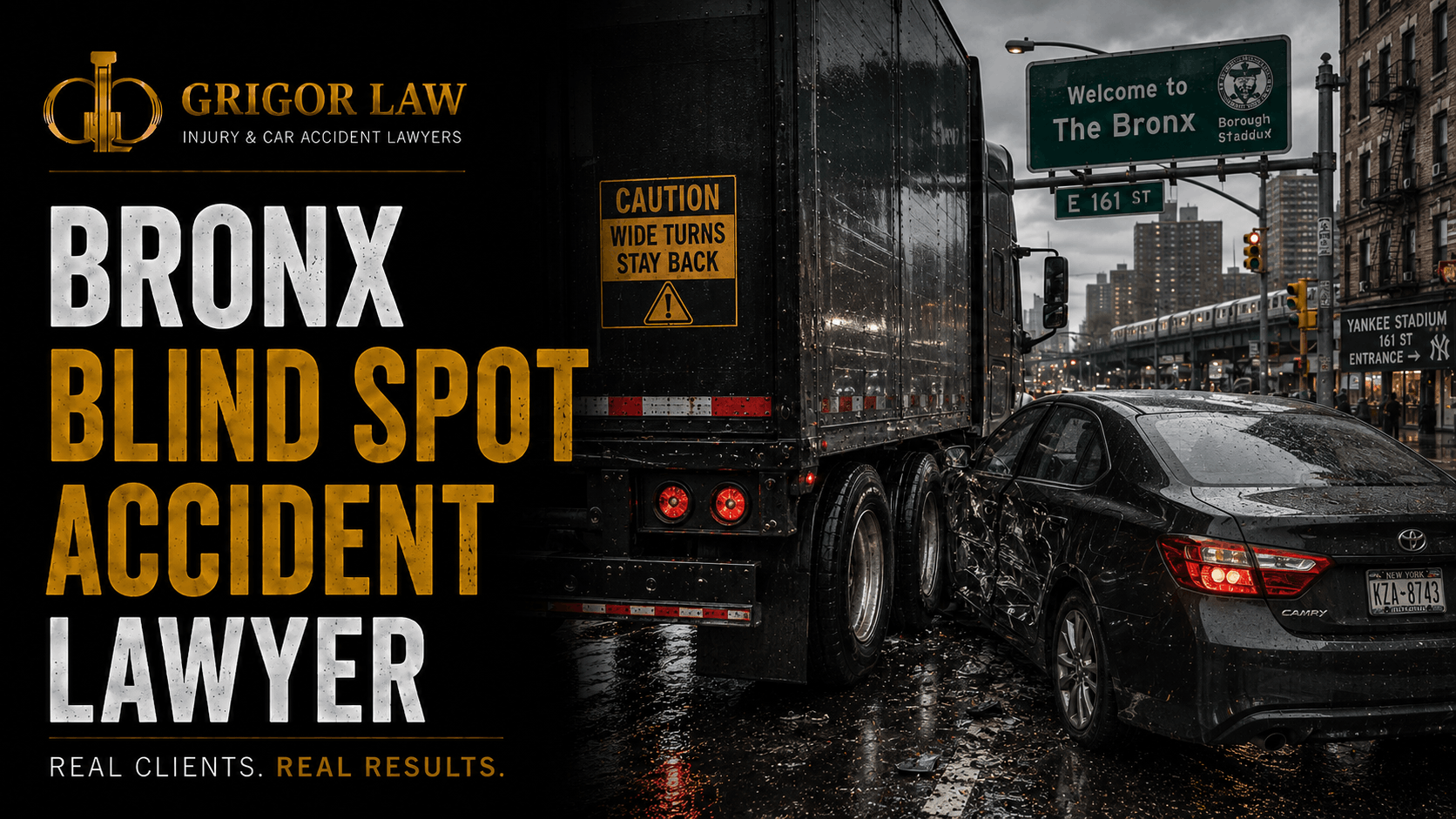
Nobody expects the car in the next lane to suddenly be there. When a driver merges without checking on the Major Deegan or changes lanes carelessly on the Cross Bronx Expressway, lives change in an instant. At Grigor Law Injury & Car Accident Lawyers, we know these crashes happen because someone failed to do something basic, look before they moved.
For over a decade, Chrissy Grigoropoulos, Esq. has represented Bronx residents injured by drivers who ignored their blind spots. We understand the specific dangers of navigating the Bruckner Boulevard merge points and the tight lanes on Fordham Road where these collisions frequently occur.
Our team speaks Spanish, Greek, French-Creole, and Korean because getting legal help shouldn’t depend on which language you speak. Call Grigor Law Injury & Car Accident Lawyers at (718) 249-7447 for a free consultation about your blind spot accident. We’re available 24/7, and you pay nothing unless we win your case.
What Is a Blind Spot Accident?
A blind spot is any area around a vehicle that the driver can’t see using mirrors alone. All vehicles have blind spots, but trucks, buses, and large SUVs can have blind zones that extend 20 to 30 feet in every direction, large enough to swallow an entire car.
These crashes most often happen when a driver changes lanes, merges onto a highway, or makes a wide turn without physically turning their head to check. On roads like the Major Deegan, Bruckner Boulevard, and Fordham Road, that moment of carelessness can be devastating.
Common blind spot collisions include:
- Sideswipes on multi-lane highways: A driver drifts into an occupied lane without signaling or looking.
- Merge collisions: A vehicle forces its way onto a ramp or expressway without yielding to traffic already there.
- Right-turn squeezes: Trucks making wide right turns trap cyclists or pedestrians in their path.
- Backing crashes: Drivers reverse out of parking spots or loading docks without checking what’s behind them.
Who Is at Fault in a Bronx Blind Spot Accident?
The driver who changed lanes, merged, or turned without confirming the path was clear is typically responsible. New York law requires every driver to check for traffic, including cyclists and pedestrians, before making any lateral movement.
That said, fault isn’t always one-sided. New York follows a pure comparative negligence rule under CPLR § 1411, which means your compensation is reduced by your share of fault, but you’re not completely barred from recovering. If a truck failed to signal before merging into your lane on the Major Deegan and you were slightly over the speed limit, you can still pursue a claim. Your recovery is adjusted, not eliminated.
Not sure where the fault falls in your case? Call us for a free case review, we’ll give you a straight answer.
What Evidence Proves a Blind Spot Case?
Blind spot crashes are often disputed because there’s no single obvious cause. Building a strong claim means moving fast to lock down evidence before it disappears.
Photos and Video Footage
Dashcams, NYC DOT traffic cameras, and nearby business security systems can capture exactly what happened. Digital footage is often overwritten quickly, so preserving it as soon as possible is critical.
Vehicle Damage and Black Box Data
The pattern of scrapes, dents, and paint transfer on each vehicle tells a story about who crossed into whose lane. We also pull event data recorder (EDR) readings, sometimes called black box data, which record speed, braking, and steering inputs at the exact moment of impact.
Blind Spot Monitoring System Records
Many newer vehicles come equipped with blind spot monitoring sensors that detect vehicles in adjacent lanes. If that system was disabled or malfunctioning, it becomes powerful evidence of negligence.
Truck Logs and Company Safety Records
For crashes involving commercial vehicles, we subpoena driver logs, training records, and company maintenance files. These documents often reveal patterns of negligence that go beyond a single bad decision.
Witness Statements and 911 Audio
Witnesses move on quickly, and 911 recordings are purged on a set schedule. We contact witnesses and submit preservation requests to the city immediately after you hire us.
What to Do After a Blind Spot Crash in the Bronx
The decisions you make in the hours and days after a crash directly affect your claim. Here’s what matters most:
- Call 911 immediately: Get police to the scene so a formal accident report is filed. This document becomes a cornerstone of your case.
- Get medical care the same day: Whiplash, concussions, and soft tissue injuries from sideswipe crashes often don’t show symptoms right away. A same-day medical visit creates a record that connects your injuries to the crash.
- Photograph everything: Capture all sides of both vehicles, skid marks, lane markings, traffic signs, and any visible injuries before the scene is cleared.
- Don’t give a recorded statement: The other driver’s insurer will call quickly. Anything you say can be used to reduce your payout. Let us handle all communication.
- Call us before you do anything else: We send formal preservation letters to businesses, trucking companies, and city agencies demanding that video and data be held. Once that footage is gone, it’s gone for good.
How New York’s No-Fault Law Applies to Your Crash
New York is a no-fault state, which means your own auto insurance covers your initial medical bills and a portion of your lost wages, regardless of who caused the crash. This coverage is called Personal Injury Protection, or PIP.
PIP pays up to $50,000 for medical treatment and reimburses 80% of lost wages up to $2,000 per month. You must file your no-fault application within 30 days of the accident, or your insurer can deny the claim entirely.
PIP does not cover pain and suffering, full lost wages, or property damage. To recover those losses, you need to step outside the no-fault system entirely.
When Can You Sue the At-Fault Driver?
You can file a lawsuit against the driver who caused your crash when your injuries meet New York’s “serious injury” threshold under Insurance Law § 5102(d). This is the legal standard that allows you to seek compensation for pain, suffering, and full economic losses.
Qualifying injuries include:
- Bone fractures.
- Significant disfigurement or permanent scarring.
- Permanent loss of use of a body part or organ.
- Significant limitation of a body function or system.
- A medically documented disability that prevents normal daily activity for at least 90 of the first 180 days after the crash.
If your injuries fall into any of these categories, a Bronx blind spot accident lawyer can help you pursue the full value of your claim, not just what no-fault will cover.
What Compensation Can You Recover?
When you step outside no-fault and file a personal injury lawsuit, the range of compensation available to you expands significantly.
| Damages Type | What It Covers |
| Medical expenses | Emergency care, surgery, rehabilitation, and future treatment |
| Lost income | Past wages, reduced earning capacity, and lost benefits |
| Pain and suffering | Physical pain, emotional distress, and PTSD |
| Property damage | Vehicle repair or replacement and damaged personal property |
| Wrongful death | Funeral costs, lost financial support, and family losses |
We calculate both your current costs and what you’ll need going forward. Insurance companies routinely lowball early offers before the full scope of your injuries is clear—we don’t let that happen.
How Long Do You Have to File a Claim?
Most personal injury claims in New York must be filed within three years of the accident. Wrongful death claims carry a two-year deadline from the date of death.
One critical exception: if the crash involved a city-owned vehicle, an MTA bus, or any other government entity, you must file a Notice of Claim within 90 days. The lawsuit itself must then be filed within one year and 90 days. Missing either deadline typically means losing your right to compensation permanently.
Why Choose Grigor Law for Your Bronx Blind Spot Accident Case?
Chrissy Grigoropoulos, Esq. founded this firm with one goal: to make sure that people hurt by someone else’s negligence have a real fighter in their corner. She’s been recognized as one of the Top 40 Under 40 Rising Stars and among the American Institute of Personal Injury Attorneys’ 10 Best Female Attorneys for Client Satisfaction—not because of how many cases she’s filed, but because of how hard she fights for each client.
Our firm represents clients across all five boroughs, Nassau, Suffolk, and Westchester counties, in state courts, federal courts, and before appellate panels. We’re fluent in the tactics insurance companies use to undervalue blind spot and sideswipe claims, and we know how to counter them.
- No upfront fees: We work on contingency—you pay nothing unless we win.
- 24/7 availability: You can reach us any time, day or night.
- Multilingual team: We serve clients in Spanish, Greek, French-Creole, and Korean.
- Hundreds of five-star reviews: Our clients speak for us.
Bronx Blind Spot Accident FAQs
Is a Driver Who Changes Lanes Always at Fault in a Blind Spot Crash?
The lane-changing driver is generally presumed at fault for failing to yield, but fault can shift if the other driver swerved suddenly or was driving erratically. Every case depends on the specific facts, which is why a thorough investigation matters.
What if Both Drivers Changed Lanes at the Same Time?
When two vehicles merge into the same lane simultaneously, fault is typically shared and apportioned under New York’s comparative negligence rule. Your recovery is reduced by your percentage of fault, but you’re not barred from compensation.
How Quickly Must I File My No-Fault PIP Application?
You must submit your no-fault application to your own insurance company within 30 days of the crash. Missing this window almost always results in a full denial of medical and wage benefits, with very limited exceptions.
Can a Cyclist or Pedestrian File a Claim After a Truck Blind Spot Crash?
Yes, cyclists and pedestrians struck by trucks turning or merging often have strong claims because commercial drivers are held to a high standard of care around vulnerable road users.
What if the At-Fault Driver Was Driving an MTA Bus or City Vehicle?
You have 90 days from the crash to file a Notice of Claim against the city or MTA, and a lawsuit must be filed within one year and 90 days. Contact us immediately, this deadline is unforgiving.
Does Hiring a Bronx Blind Spot Accident Lawyer Cost Anything Upfront?
No. Grigor Law Injury & Car Accident Lawyers works entirely on a contingency fee basis. You pay nothing unless we recover compensation for you.
Talk to a Bronx Blind Spot Accident Lawyer Today
You shouldn’t have to fight an insurance company while you’re still recovering from a crash that wasn’t your fault. At Grigor Law Injury & Car Accident Lawyers, we step in immediately, securing evidence, handling the insurers, and building the strongest possible case on your behalf.
Consultations are always free, and we’re available around the clock. Whether you prefer English, Spanish, Greek, French-Creole, or Korean, our team is ready to listen and help you move forward.
Injured in the Bronx? Don’t wait. Contact Grigor Law Injury & Car Accident Lawyers today to schedule your free consultation. We’ll handle the fight, you focus on healing.