
 (718) 249-7447
 Call Us Now


When a truck carries more weight than legally allowed, every law of physics works against you in a crash. The extra tonnage means longer stopping distances, harder impacts, and injuries that standard car accidents rarely cause. At Grigor Law Injury & Car Accident Lawyers, we know these cases inside out, from spotting altered weight tickets to tracking down destroyed dispatch logs before trucking companies make them disappear.
We’ve handled overloaded truck crashes on Myrtle Avenue, Fresh Pond Road, and every major corridor through Ridgewood. Our team understands the federal weight regulations these drivers violate and the corporate pressure that pushes them to do it. While insurance companies work overtime to protect trucking profits, we work around the clock to protect you—sending preservation letters within hours, securing black box data, and building cases that force fair settlements.
You shouldn’t have to decode trucking regulations or battle corporate insurers while recovering from serious injuries. That’s our job. We speak your language—whether it’s Spanish, Greek, French-Creole, or Korean—and we’re available whenever you need us. No fees unless we win, and we start fighting for you the moment you call.
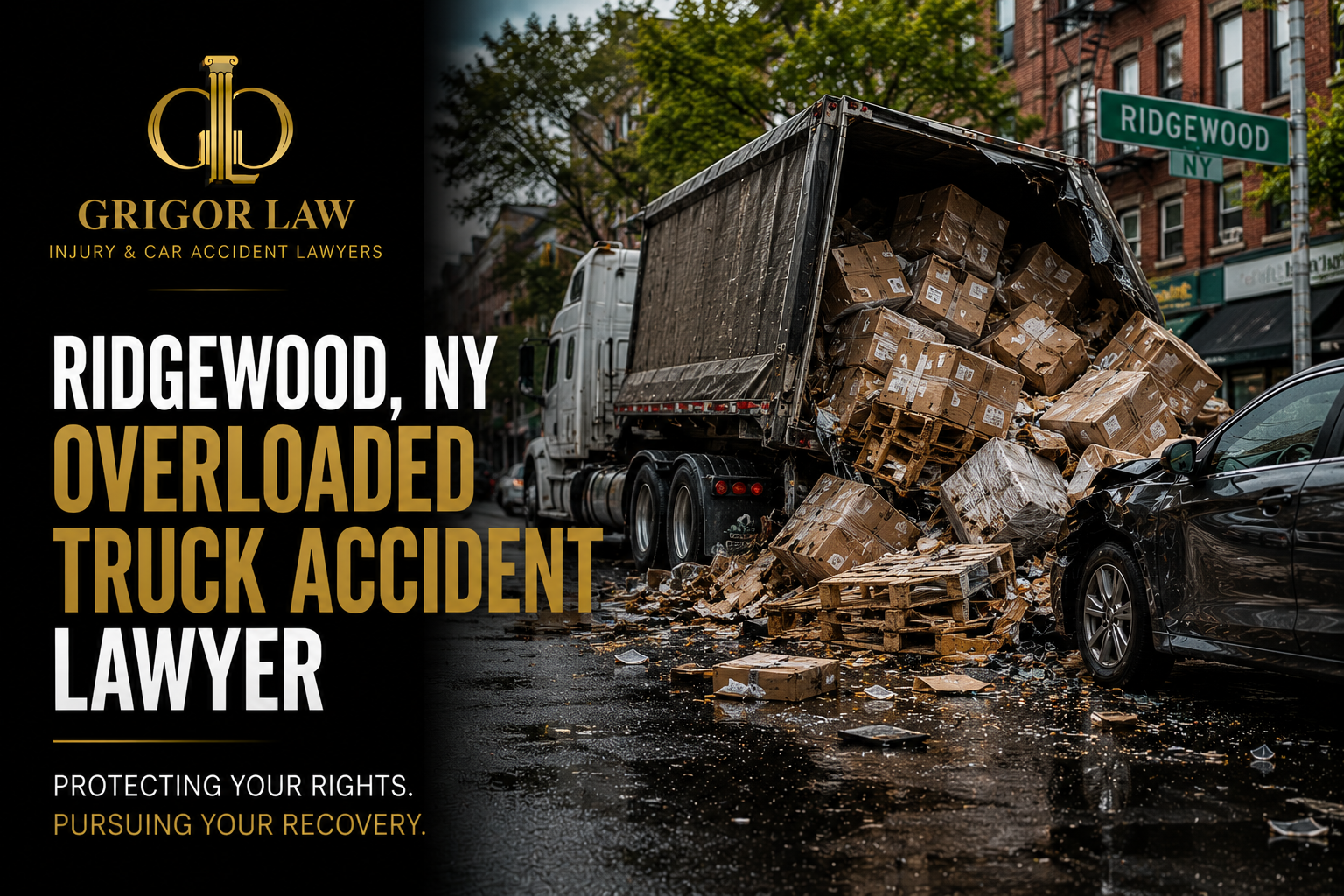
Do I Have an Overloaded Truck Accident Case in New York?
If your injuries meet New York’s “serious injury” threshold, you almost certainly have a case worth pursuing. Overloaded trucks hit harder and stop slower than legally loaded ones, which means the crashes they cause tend to produce exactly the kinds of injuries the law recognizes.
New York’s no-fault system requires your own auto insurance to cover initial medical bills and partial lost wages through Personal Injury Protection (PIP), regardless of who caused the crash. But no-fault has limits and when an overloaded truck is involved, those limits rarely cover what victims actually lose.
You can step outside the no-fault system and file a full lawsuit if your injury includes:
- Any fracture: Even a minor broken bone qualifies automatically.
- Significant disfigurement: Permanent scarring or visible deformity.
- Permanent limitation: Lasting loss of use of a body part, organ, or system.
- 90/180-day rule: An injury that prevents normal daily activities for at least 90 of the first 180 days following the crash.
What to Do After an Overloaded Truck Crash in Ridgewood
The choices you make in the hours after a crash can either protect your case or quietly destroy it. Here’s what matters most.
Get medical care first. Even if you feel okay, go to Wyckoff Heights Medical Center or the nearest emergency room. Adrenaline hides serious injuries, and your medical records are the first official link between the crash and your harm.
Call the NYPD 104th Precinct and make sure an officer files a report at the scene. Ask for the report number and the responding officer’s name and badge number before you leave.
Document the truck before it moves. This step is specific to overload cases and cannot wait. Use your phone to photograph:
- The truck’s DOT number, company name, and license plate.
- Any spilled, shifted, or unsecured cargo on the road.
- Debris patterns that show where the load came from.
- The truck’s tires, axles, and visible damage.
Submit your no-fault application within 30 days. Miss this deadline and you lose access to medical and wage benefits while your lawsuit is pending—no exceptions.
Do not give a recorded statement to the trucking company’s insurer. Their adjuster will call quickly and sound helpful. They are not. Decline politely and direct them to your attorney.
Call a Ridgewood overloaded truck accident lawyer immediately. Electronic logging device (ELD) data, weigh-station tickets, and dashcam footage can be legally destroyed within weeks unless a preservation letter is sent first.
Who Is Liable When a Truck Is Overloaded?
Liability in these cases rarely stops with the driver. Multiple parties often share responsibility, which means multiple insurance policies may be available to fund your recovery.
Trucking companies pressure drivers to haul unsafe loads to meet tight deadlines. Shippers and loading companies sometimes pack cargo beyond legal limits or skip proper securement. When we take on an overloaded truck case, we look at every link in the chain.
Parties we investigate include:
- The truck driver for ignoring weight limits, failing to inspect the cargo, or speeding with an unsafe load.
- The trucking company for negligent hiring, inadequate training, or pushing drivers past legal limits.
- The shipper or loader for improperly stacking, balancing, or securing the cargo before departure.
- The truck owner, who can be strictly liable under New York law for how their vehicle is operated.
- Maintenance contractors if brake or tire failure under excess weight contributed to the crash.
Were You Hit by a City Truck? The 90-Day Deadline Changes Everything
If a DSNY garbage truck, a DOT vehicle, or any other city-owned truck caused your crash, a separate and much shorter deadline applies. You must file a Notice of Claim—a formal written document informing the city that you intend to sue—within 90 days of the accident.
Miss that window and you permanently lose your right to sue the city, no matter how serious your injuries are. This is one of the most unforgiving deadlines in New York law, and it catches injured people off guard constantly.
How We Prove Overloading and Cargo Violations
Proving an overload case takes more than photos of the damage. It requires fast access to the truck’s electronic and paper trail before the company destroys it. We send preservation letters within days and use the formal legal discovery process to demand what we need.
| Evidence We Secure | What It Proves |
| ELD / Black Box Data | Speed, braking force, and hours driven before the crash |
| Weigh-Station Tickets | Whether the truck exceeded legal weight limits |
| Bills of Lading and Cargo Manifests | Declared weight, load layout, and shipper responsibility |
| Maintenance and Inspection Logs | Whether brakes, tires, and axles could safely handle the load |
| Dashcam and Surveillance Footage | Visual proof of shifting cargo, swaying, or debris on impact |
We also work with accident reconstruction experts and reference FMCSA cargo securement rules—federal regulations that govern how commercial loads must be tied down and distributed—to show exactly where the system failed.
What Injuries Qualify for a Lawsuit Beyond No-Fault?
Because overloaded trucks carry more mass and require significantly longer stopping distances, even a moderate-speed collision can cause life-altering harm. The injuries we see most often in these cases include:
- Traumatic brain injuries and concussions.
- Spinal cord damage and paralysis.
- Multiple fractures and crush injuries.
- Internal organ damage requiring emergency surgery.
- Severe burns from post-crash fuel fires.
- Amputations and permanent disfigurement.
These injuries almost always meet New York’s serious injury threshold, which is why overloaded truck cases so frequently move into full litigation rather than staying within the no-fault system.
What Compensation Can You Recover?
You can pursue both economic damages—your real, out-of-pocket losses—and non-economic damages, which cover the human cost of what you’ve been through.
- Medical expenses: Emergency care, surgery, hospitalization, physical therapy, medication, and future treatment.
- Lost wages and earning capacity: Income already lost and what you can no longer earn if your injuries are permanent.
- Pain and suffering: Physical pain, emotional distress, anxiety, and the loss of enjoyment in daily life are all factors that influence the average personal injury settlement in New York.
- Property damage: The cost to repair or replace your vehicle and personal belongings.
- Punitive damages: Available when a trucking company knowingly dispatched an overweight or improperly secured truck—courts use these to punish reckless corporate behavior.
Can You Still Recover if You Were Partly at Fault?
Yes. New York follows comparative negligence, meaning your compensation is reduced by your share of fault, but not eliminated. If you were found 20% responsible in a case worth $200,000, you would still recover $160,000.
Trucking insurers know this rule and use it aggressively. They will look for any way to push fault onto you—a lane change, a delayed brake, anything—to shrink what they owe. We push back with evidence, not arguments.
How Long Do You Have to File in New York?
Several deadlines apply to overloaded truck accident claims, and missing any one of them can permanently end your case.
- You have 30 days to file your no-fault application for medical and wage benefits.
- You have 90 days to file a Notice of Claim if a government vehicle was involved.
- You have 2 years to file a wrongful death claim.
- You have 3 years from the date of the crash to file most personal injury lawsuits.
Evidence disappears fast in truck cases. Driver logs get overwritten, surveillance footage gets deleted, and witnesses move on. The sooner you call, the stronger your case.
How We Handle Insurance Company Tactics
Trucking companies carry large insurance policies, and their adjusters are trained to protect every dollar of that coverage. They move fast, sometimes calling within days of the crash, because they know injured people are vulnerable.
Common tactics we shut down include lowball settlement offers made before you know the full extent of your injuries, recorded statement requests designed to capture inconsistencies, insurer-selected medical exams that routinely minimize harm, and surveillance operations meant to undercut your credibility. We handle every communication so their tactics never reach you directly.
Why Choose Grigor Law for Your Ridgewood Overloaded Truck Accident Case?
Overloaded truck cases are won through speed, evidence, and pressure and that is exactly how Grigor Law Injury & Car Accident Lawyers operates. Chrissy Grigoropoulos, Esq., recognized as one of the American Institute of Personal Injury Attorneys’ 10 Best Female Attorneys for Client Satisfaction, has built her reputation on thorough preparation and refusing to back down when insurers push back.
Our office is located right here in Ridgewood at 6088 Myrtle Avenue. We are available 24/7 and serve clients in Spanish, Greek, French-Creole, and Korean—because no one should face a language barrier when they need legal help most. You pay nothing unless we win.
Injured in an overloaded truck crash in Ridgewood? Contact Grigor Law Injury & Car Accident Lawyers today or call (718) 249-7447 to schedule your free consultation. We handle the fight so you can focus on healing.
Overloaded Truck Accident FAQ
What Counts as an Overloaded Truck Under New York Law?
A truck is overloaded when its gross weight, axle weight, or cargo securement violates state or federal limits—confirmed by weigh-station tickets, bills of lading, or post-crash inspections.
Can I Sue the Company That Loaded the Truck?
Yes. If the shipper or loader negligently packed or failed to secure the cargo, they can be held liable alongside the driver and trucking company, which often expands the total insurance coverage available to you.
How Do You Get Weigh Tickets and Black Box Data From the Trucking Company?
We send legal preservation letters immediately and use the formal discovery process to demand electronic logs, cargo manifests, and maintenance records before they can be destroyed.
Are Punitive Damages Available in Overloaded Truck Cases?
Yes, when evidence shows a trucking company knowingly dispatched an overweight or unsecured load, courts may award punitive damages on top of your regular compensation to punish the misconduct.
What If the Overloaded Truck Fled the Scene?
We investigate using traffic cameras, business surveillance footage, witness accounts, and roadway debris analysis. We can also help you pursue an uninsured motorist claim through your own auto policy.
Does Immigration Status Affect My Right to File a Claim in New York?
No. New York law protects every injured person’s right to pursue compensation regardless of immigration status, and our team serves clients in Spanish, Greek, French-Creole, and Korean.